

What is the difference between correlation and causation? In statistics, two events may occur together without one causing the other. This video explains why correlation does not imply causation, using real-world examples like ice-cream sales and shark attacks. You’ll learn about common statistical pitfalls such as confounding variables, reverse causality, and spurious correlations, and how researchers test causal relationships using randomized controlled trials, natural experiments, and longitudinal studies. Understanding these concepts helps you critically evaluate claims in science, media, and everyday data.
the full story
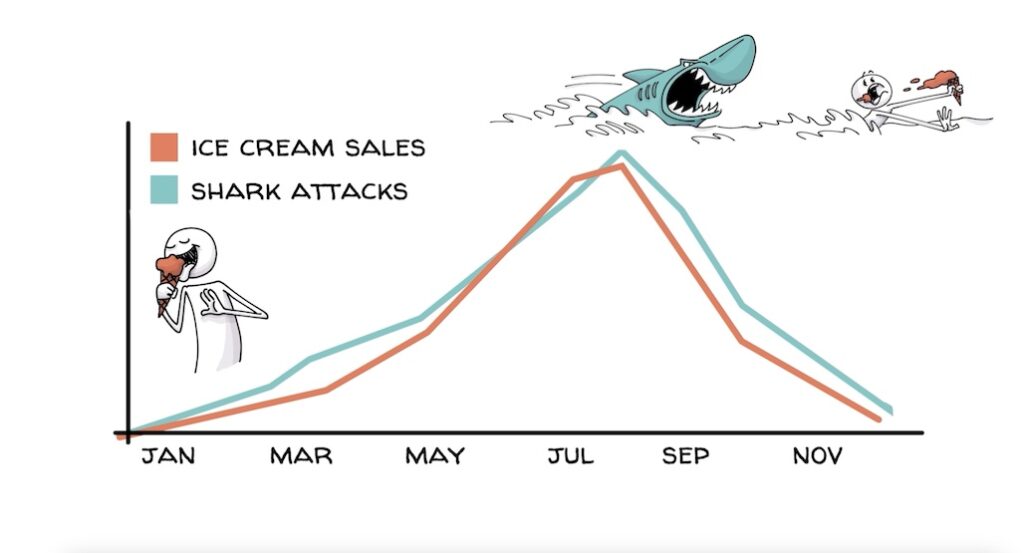
There is a famous graph that shows ice‑cream sales and shark attacks. But, does the first cause the latter? “Not so fast!”
Correlation vs Causation
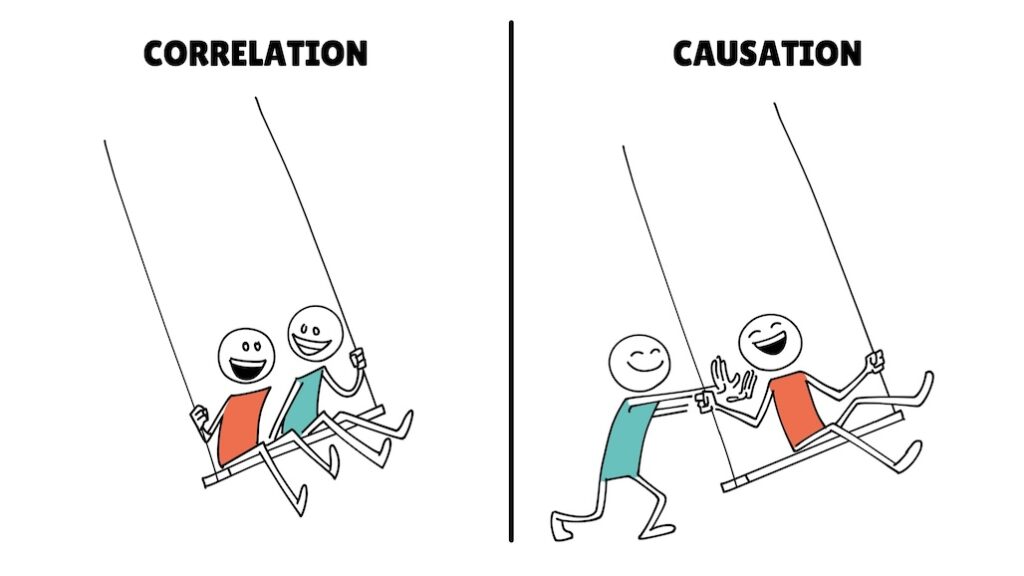
In statistics, we must differ between correlation and causation. Correlation means two things move together at the same time. Causation means one thing causes a change in the other. But there is more to it.
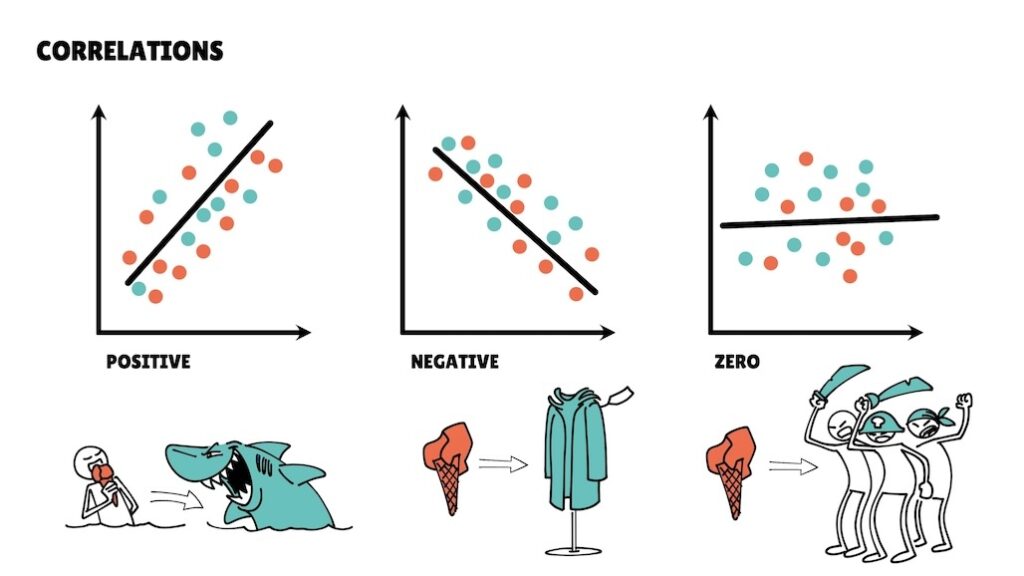
Correlations can be positive, negative, or zero. Think of: Ice cream sales and shark attacks; Ice cream and raincoat sales; and ice cream and the number of pirates worldwide. They can be weak, strong, or even perfect. Like: Hours playing video games and slices of pizza eaten; time spent studying vs test scores; the number of left and right socks produced.
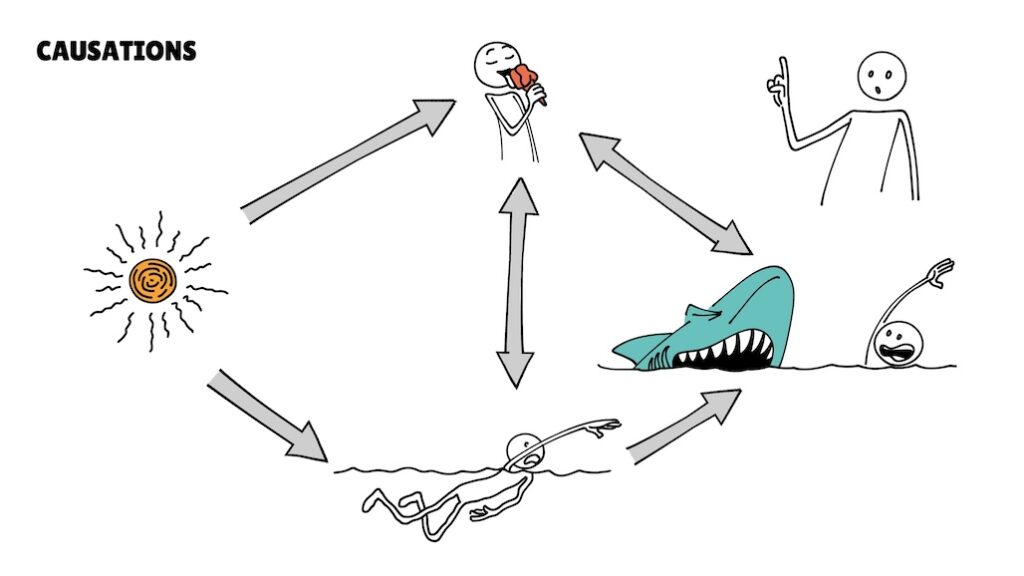
Causations exist if one thing affects others—often multiple things.
The effect can be strong, or weak—and between effects we often see correlations. But there is one problem.
common mistake
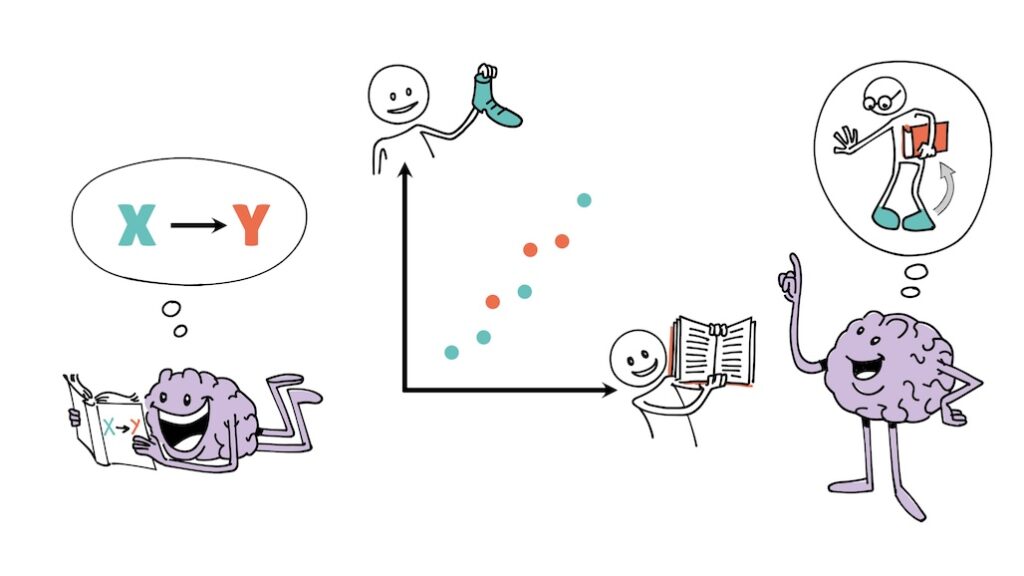
Our brains love simple stories, such as X causes Y. This is why when we see a strong correlation, say kids’ shoe size and reading ability, we may think of causation. But three solutions help us avoid these errors.
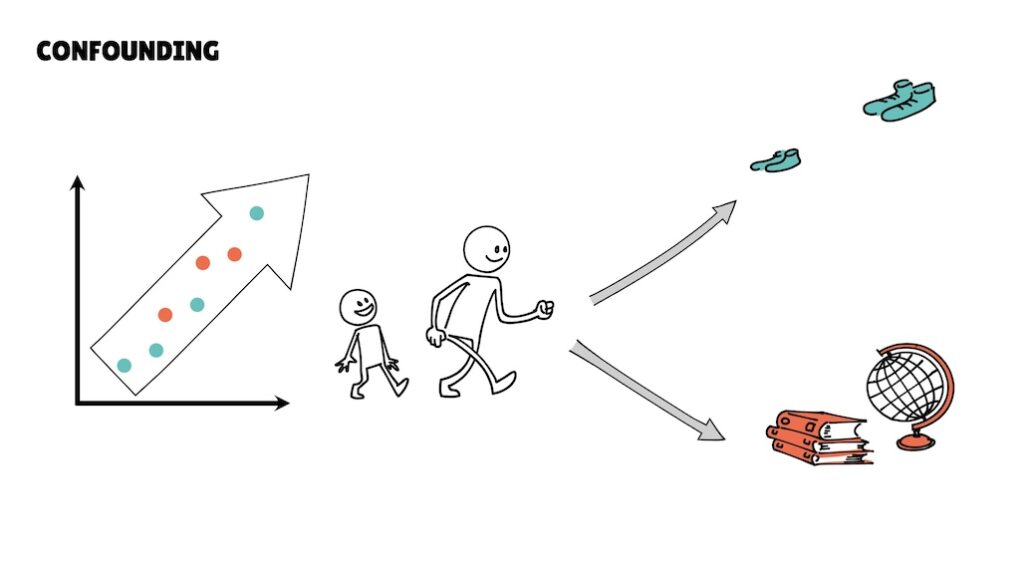
As kids grow, they need larger shoes and get better at reading. Ifa third factor drives correlating results, we call it confounding.
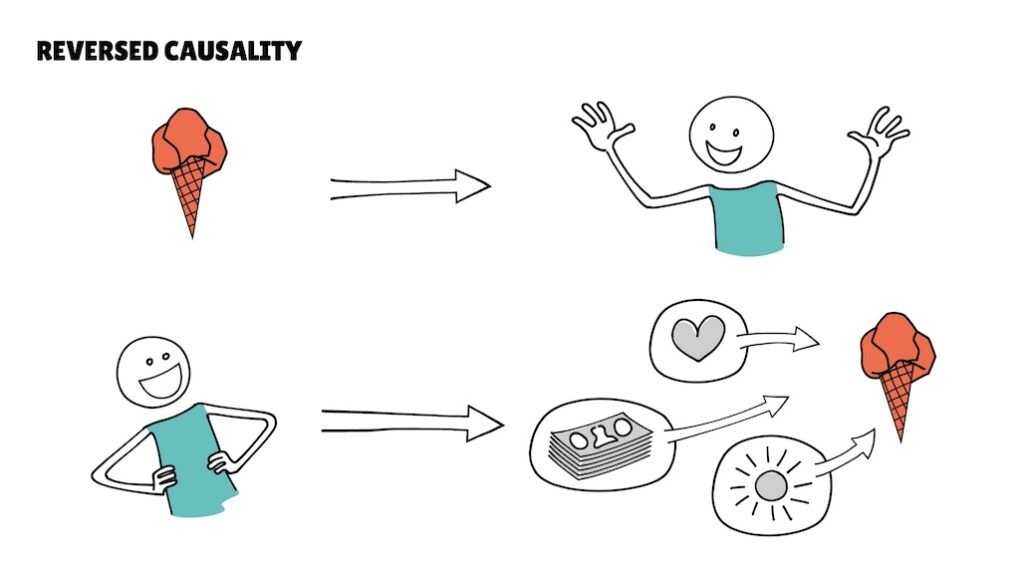
Then there is reversed causality. We may think that ice cream makes people happy, but maybe happy people just have more reasons to buy ice cream? It’s not that clear.
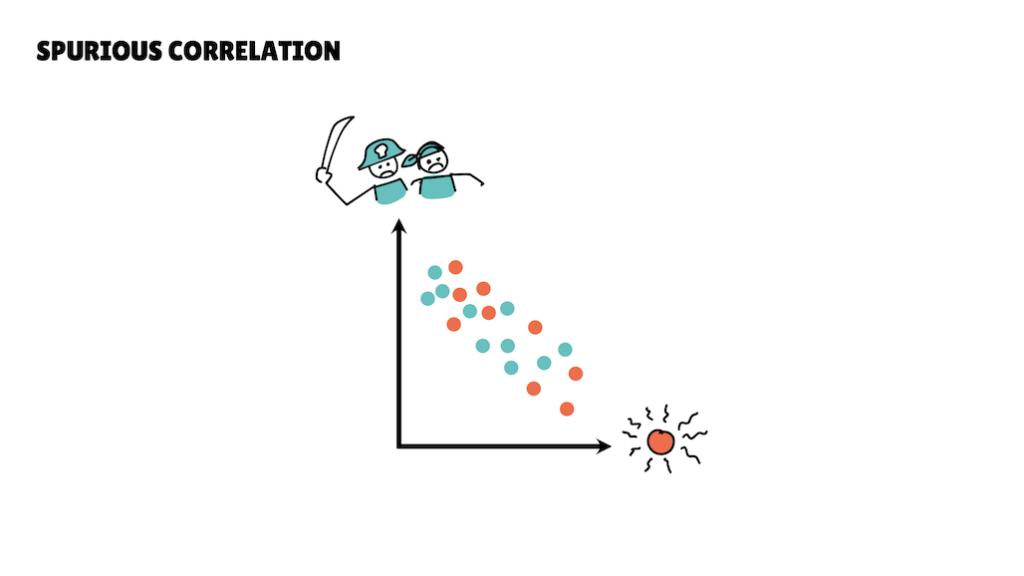
Spurious correlation exists when patterns appear by chance. For example: as the number of pirates decreased, we recorded increasingly hotter days—but there’s no plausible common cause.
Example analysis
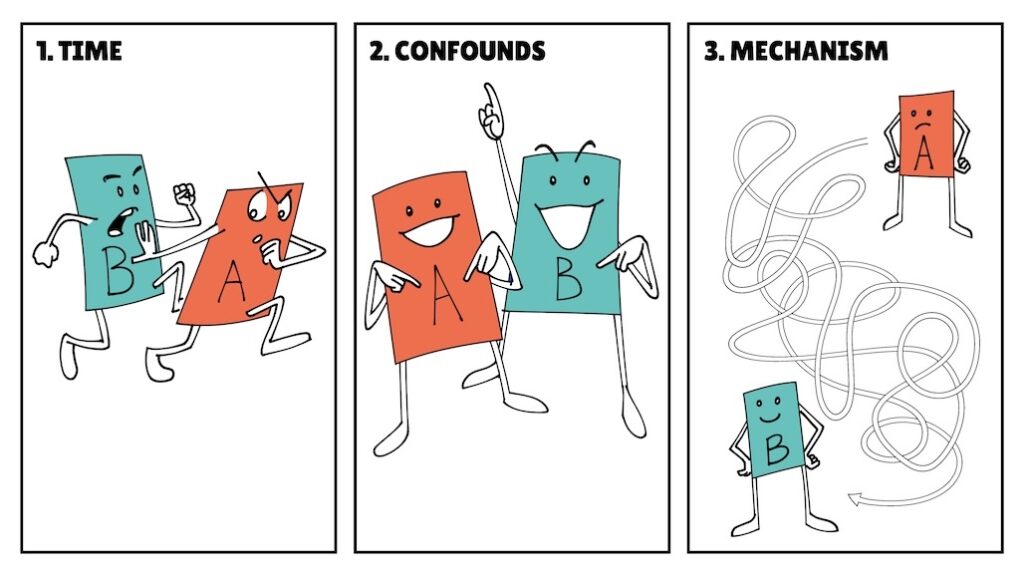
There are three questions to test a causal claim:
- Did A happen before B?
- What could cause both?
- Is there a plausible path from A to B?
Suppose someone claims that students who sleep more get better grades.
1. Does longer sleep come before better grades?
2. Do organized students maybe do both: sleep more and study more?
3. Sleep may boost attention and memory—but can it explain better grades?
To look for a real causal link, serious social scientists typically turn to three methods.
Research Method
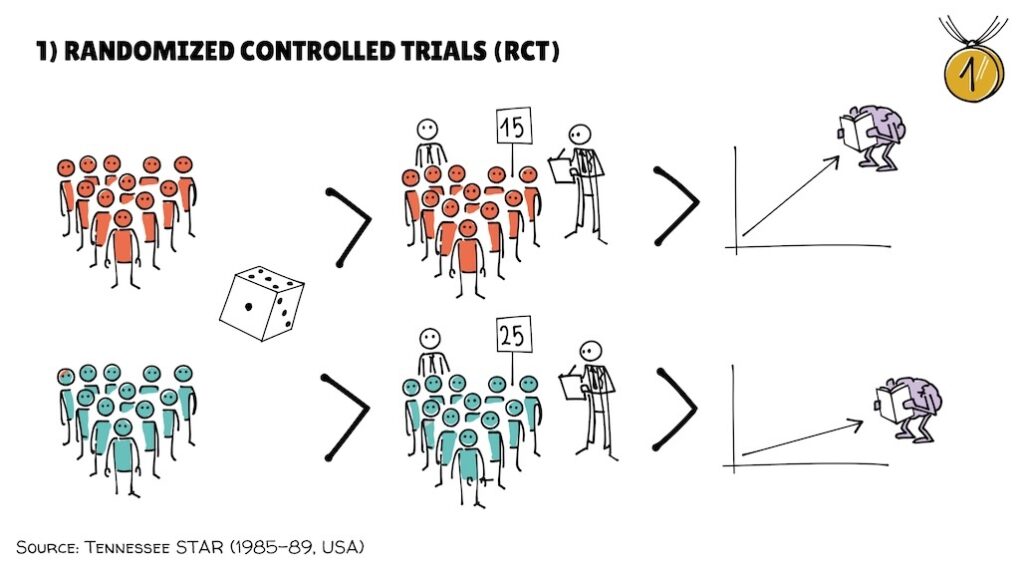
In Randomized Controlled Trials, people are randomly put into two different situations—say, school classes with 15 students and classes with 25. Scientists then look at what happens and may find that one group learns faster than the other—ideally, that experiment then gets replicated.
RCTs are considered the gold standard of research.
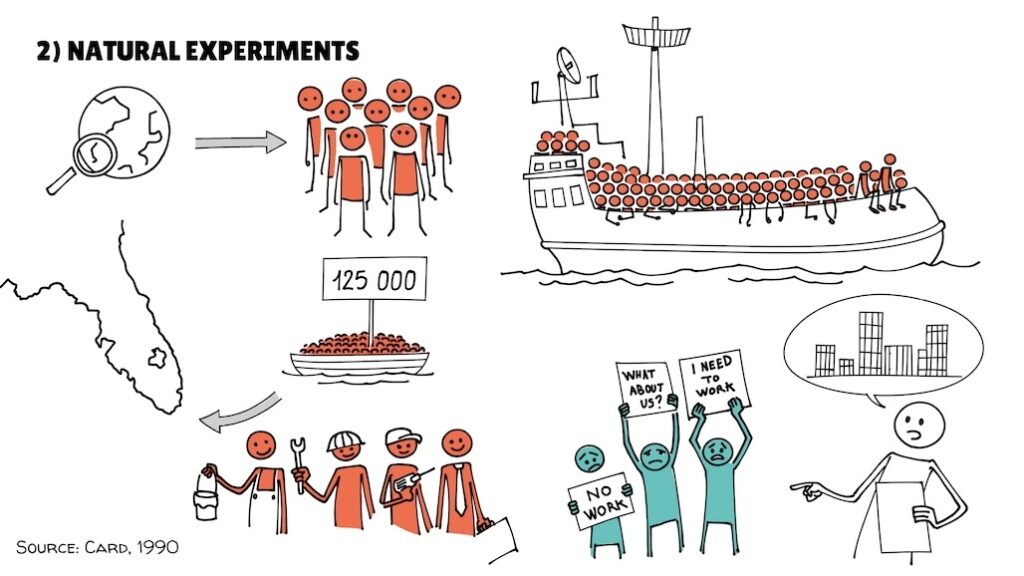
Natural Experiments arereal‑world events that create “as if random” groups —the Mariel Boatlift is such an example. In 1980, 125,000 Cuban refugees arrived in Miami almost overnight. With all these new workers, local employees feared for their jobs. But economists later compared the situation in Miami to similar cities and found wages were hardly affected.
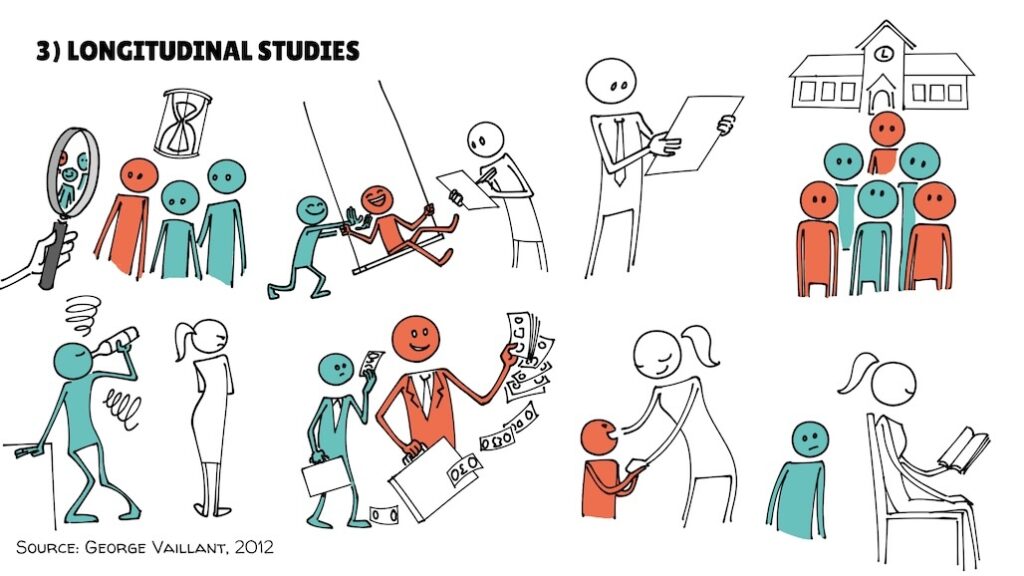
Longitudinal Studies track the same people over many years to check time order. The Grant Study, for example, tracked 268 Harvard-educated men since 1938. It found that alcoholism was the main cause of a divorce and that men who earned more typically had “warm” childhood relationships with their mothers —those who earned less, didn’t.
To help us find a causal link, it’s useful to compare apples with apples—such as grouping people by age, income, or lifestyle—when we study them.
try it yourself

Now it’s your turn! Imagine you see this headline: “Kids with more books at home do better in school.” First ask yourself the three questions to test the causal claim and then design a test to find out. Share your findings in the comments below.
Sources
- Correlation does not imply causation – Wikipedia.org
- Spurious relationship – Wikipedia.org
- Scientific evidence – Wikipedia.org
- Causality – Wikipedia.org
- Correlation – Wikipedia.org
- Natural experiment – Wikipedia.org
- Randomized controlled trial – Wikipedia.org
- Longitudinal study – Wikipedia.org
- Grant Study – Wikipedia.org
Dig deeper!
- Watch: The Danger of mixing up causality and correlation. This video explains why our brains tend to see patterns where none exist and how we can think more critically.
- Try this exercise from Khan Academy, where you analyze scenarios and decide whether a claim shows causation or just correlation.
- Improve your decision-making skills with this interactive Correlation vs Causation Guide from Clearer Thinking.
Classroom activity
- Setup: Create 6 claim cards and 18 confound cards (3 per claim).
- Example claim cards:
- More screen time → worse sleep
- After‑school sports → better grades
- Coffee drinking → anxiety
- Tutoring → higher test scores
- Longer commutes → lower happiness
- Part‑time jobs → lower homework time
- Confound examples: workload, parental support, personality, health, income, school resources, commute options, study habits, neighborhood safety, etc.
- Task: In small groups, match at least two plausible confounds to each claim and propose one study improvement (a control to measure, a before‑after design, or a natural experiment).
Discussion prompts:
- Which confound was most surprising?
- How would you explain “correlation is not causation” to someone outside class?
- When is an RCT impossible—and what’s the next‑best method?
collaborators
- Script: Jonas Koblin
- Cartoon artist: Pascal Gaggelli
- Producer: Selina Bador
- Voice artist: Matt
- Coloring: Nalin
- Editing: Peera Lertsukittipongsa
- Sound Design: Miguel Ojeda
- Publishing: Vijyada Songrienchai