
Why are we quick to judge other people but more likely to blame circumstances for our own mistakes? In this video, we explore the Fundamental Attribution Error, a cognitive bias that makes us overestimate personality and underestimate situational factors when explaining behavior. We reveal why our judgments can be surprisingly inaccurate. You’ll also learn how the Actor-Observer Bias works and a simple question that can help you make fairer judgments about other people.
restaurant example
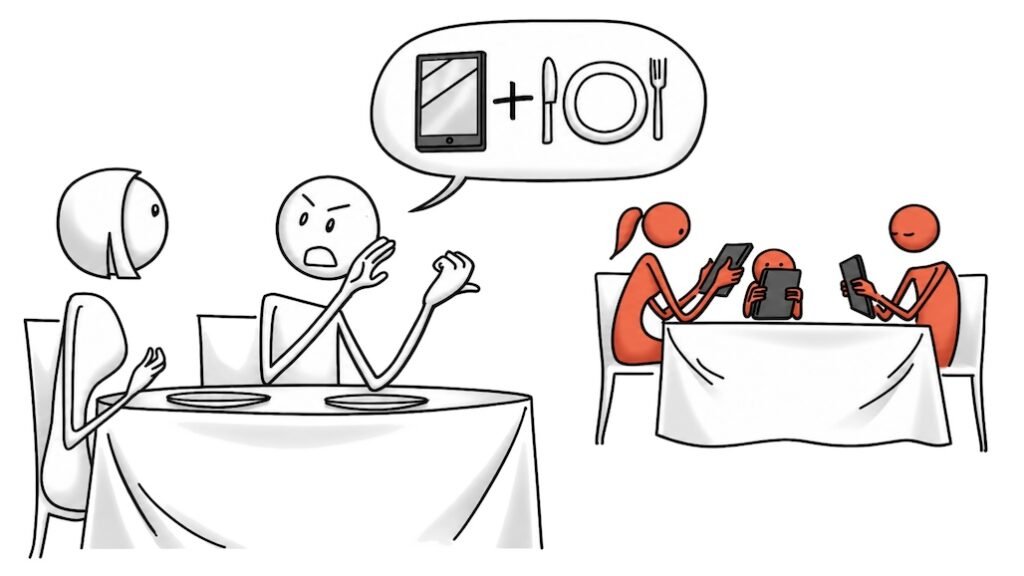
Imagine sitting down in a really nice restaurant, only to find the family at the next table glued to their iPads. Your reaction: “Bad manners!” Then, a waiter walks over and hands you the menu. And now you’re holding a tablet too.
Fundamental attribution error
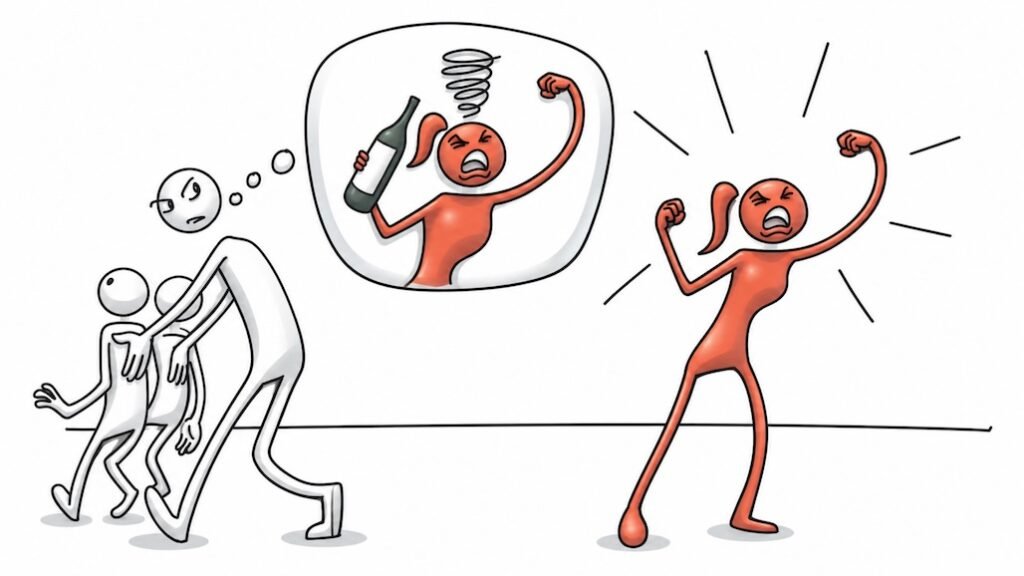
The Fundamental Attribution Error is the tendency to explain other people’s behavior by blaming their personality while overlooking the circumstances. When we see someone who acts out, we fill in the blanks.
If someone is late, we may think: “She’s disorganized.” If someone we admire doesn’t return a text, we assume: “They don’t like us.” And if a cashier is unfriendly, we figure: “He’s rude.” We rarely stop to consider external factors: Maybe they had no choice, maybe they were distracted, maybe they just had a terrible day.
Castro experiment
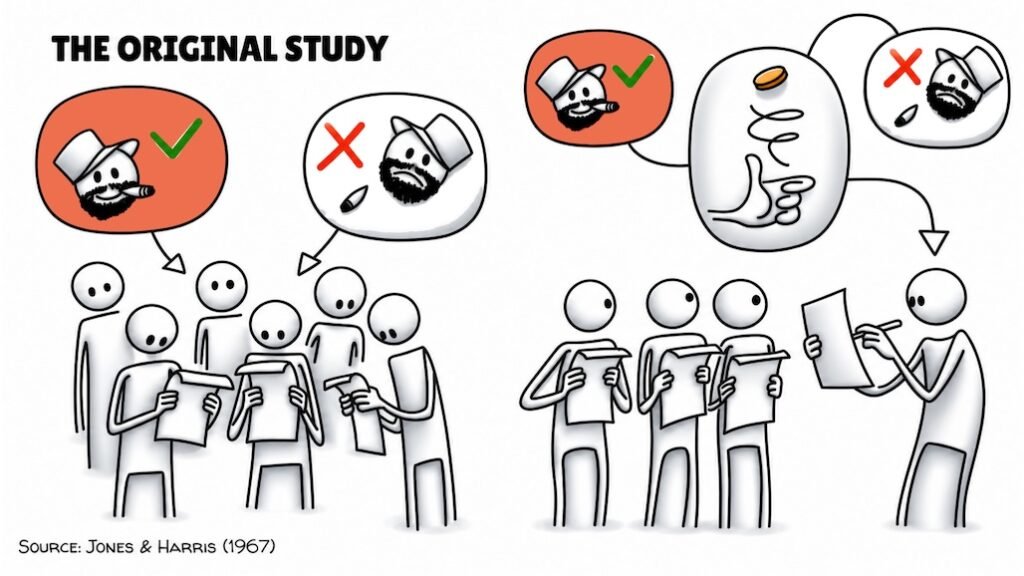
In a famous 1967 experiment, researchers had students read different essays about Fidel Castro—some supporting him, others opposing the Cuban leader. Half of the participants were also told that the authors had been assigned—by a coin toss—to take a particular side. You should assume that if someone is forced to support or reject a certain view, this is not necessarily their own opinion.
However, the students insisted that the pro-Castro writers truly supported the leader, even though they had no choice. This illustrates how we overemphasize internal factors (like attitudes) and underemphasize external ones (like random assignment).
Quizmaster experiment
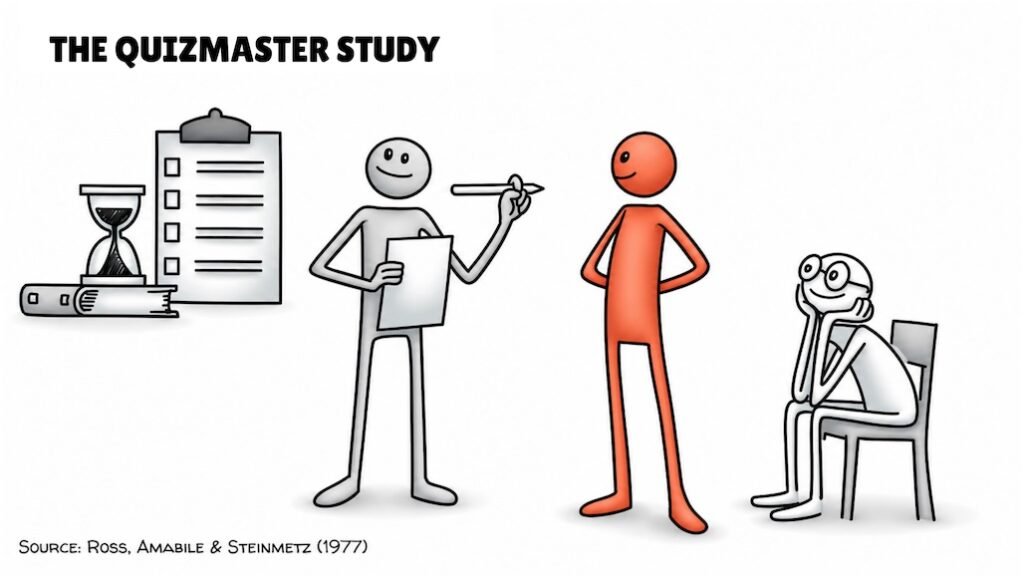
Another prominent experiment is the “Quizmaster” study, in which participants were randomly assigned to be either interviewers, contestants, or observers. The questioners then prepared ten difficult questions based on their own knowledge—many of which were drawn from personal experiences and were effectively impossible for the contestants to answer. After the show, the researcher asked all participants who was more knowledgeable: The questioners or the contestants?
Both observers and contestants later rated the questioners as significantly more knowledgeable than the contender, attributing higher intelligence. Only the questioners recognized the unfair advantage and did not rate themselves as superior.
Why we misjudge
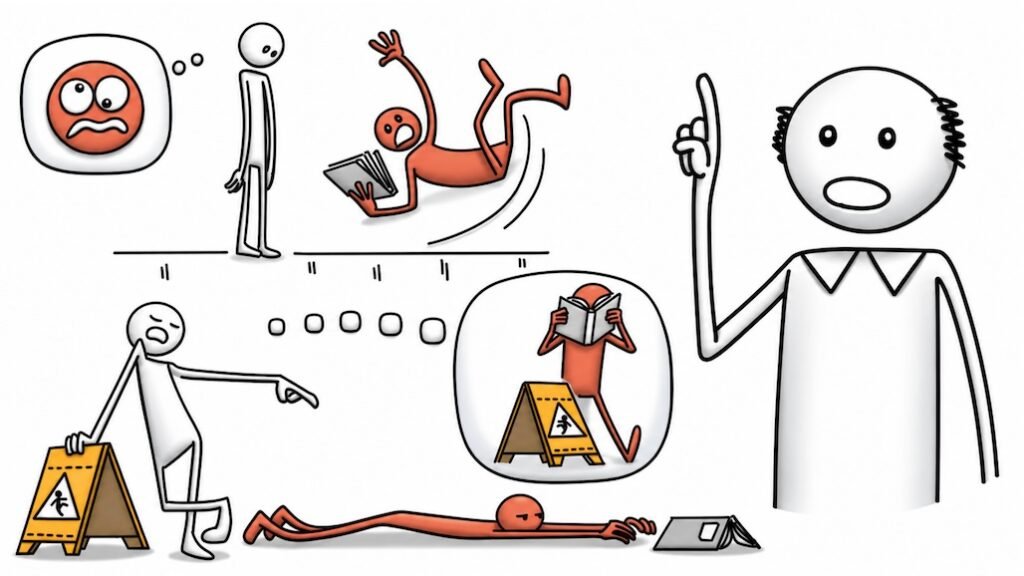
“The tendency to attribute behavior to personal dispositions is so strong that it persists even when we know better,” Lee Ross, who coined the term “Fundamental Attribution Error”, later wrote.
Psychologists say we make this error because we tend to see only our own thoughts, feelings, and problems—but not those of others. And since external factors are often invisible to others, we fill in the gaps and draw our own conclusions. It’s a mental shortcut: fast, but often not right.
Spot the bias
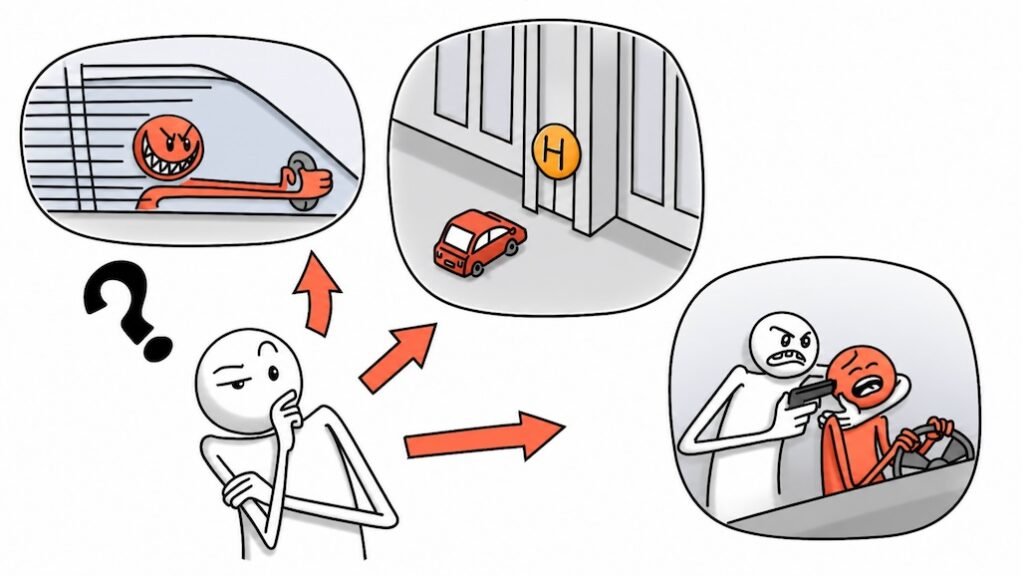
To help spot this bias in real life, ask: “What else could explain a particular behavior?” and think of two situations you can’t see.
Actor-observer bias
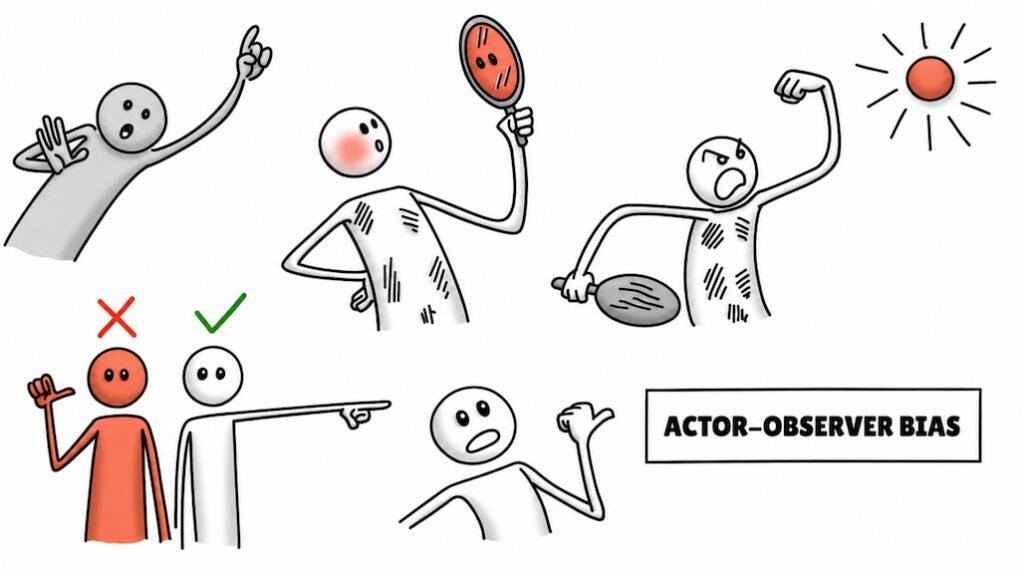
But beware. When judging our own missteps, we’re more likely to blame the circumstances. That self-serving double standard is called the Actor-Observer Bias.
Sources
- Fundamental attribution error – Wikipedia.org
- Jones, E. E., & Harris, V. A. (1967). The attribution of attitudes. Journal of Experimental Social Psychology, 3(1), 1–24.
- Ross, L., Amabile, T. M., & Steinmetz, J. L. (1977). Social roles, social control, and biases in social-perception processes. Journal of Personality and Social Psychology, 35(7), 485–494.
Dig deeper!
- Explore the different biases that shape how we explain people’s behavior in this guide to Biases in Attribution from the University of Oregon.
- Can you tell the difference between the Fundamental Attribution Error and the Actor-Observer Bias? Discover how these two concepts shape the way we judge ourselves and others with Khan Academy’s guide to attribution theory.
- Dive into J. G. Miller’s research, Culture and the Development of Everyday Social Explanation, to discover how cultural differences may shape our social judgments.
Classroom activity
Objective: Students will understand the Fundamental Attribution Error, identify how it influences judgments, and practice considering situational factors before judging others.
Materials Needed:
- Sprouts video: The Fundamental Attribution Error
- 12 scenario cards
- Sticky notes and markers
- Whiteboard or chart paper
Duration: 60 minutes
1. Introduction and Video Viewing (10 minutes)
- Ask: “Have you ever thought someone was rude, lazy, or careless, only to discover there was another reason?”
- Invite a few responses
- Watch the Sprouts video on the Fundamental Attribution Error
2. Group Analysis (15 minutes)
- Divide students into four groups.
- Ask each group to send a representative to pick up a scenario card.
- In small groups, students identify their first judgment, then brainstorm two unseen circumstances that could explain each behavior.
3. Group Presentations and Synthesis (15 minutes)
- Groups share their scenarios and alternative explanations.
- The teacher records personality-based judgments and situational explanations on the board.
- Together, define the Fundamental Attribution Error as the tendency to overemphasize personal traits and overlook situational factors when judging others.
4. Bias in Action (15 minutes)
- Discuss the quizmaster experiment from the video.
- Ask: “Why did observers think the questioners were more knowledgeable when they had an unfair advantage?”
- Then discuss: “When we make mistakes, do we blame our personality or our circumstances?” Introduce the Actor-Observer Bias and compare it with the Fundamental Attribution Error.
5. Reflection and Sharing (5 minutes)
- Ask students to recall a time they misjudged someone.
- Invite them to complete this sentence: “Before judging someone’s behavior, I will ask myself, ‘What else could explain this?’”
Collaborators
- Script: Jonas Koblin
- Cartoon Artist: Pascal Gaggelli
- Producer: Selina Bador
- Voice Artist: Matt
- Coloring: Nalin
- Editing: Peera Lertsukittipongsa
- Sound Design: Miguel Ojeda
- Publishing: Vijyada Songrienchai
