

“Power tends to corrupt, and absolute power corrupts absolutely,” Lord Acton warned in 1887. In this video, we explore how a rigged Monopoly experiment reveals the psychology of power — and how elevated status can change human behavior, fostering entitlement and eroding empathy.
the full story
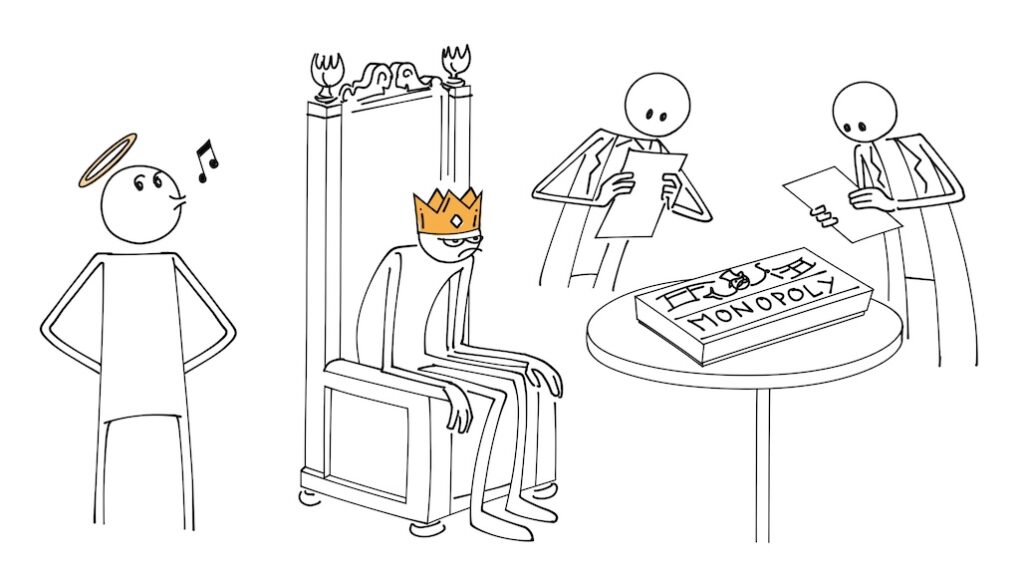
“Power tends to corrupt, and absolute power corrupts absolutely” Lord Acton warned in 1887. But why do gentle souls harden once they occupy the “big chair”? A famous Monopoly experiment offers a clue.
the monopoly experiment
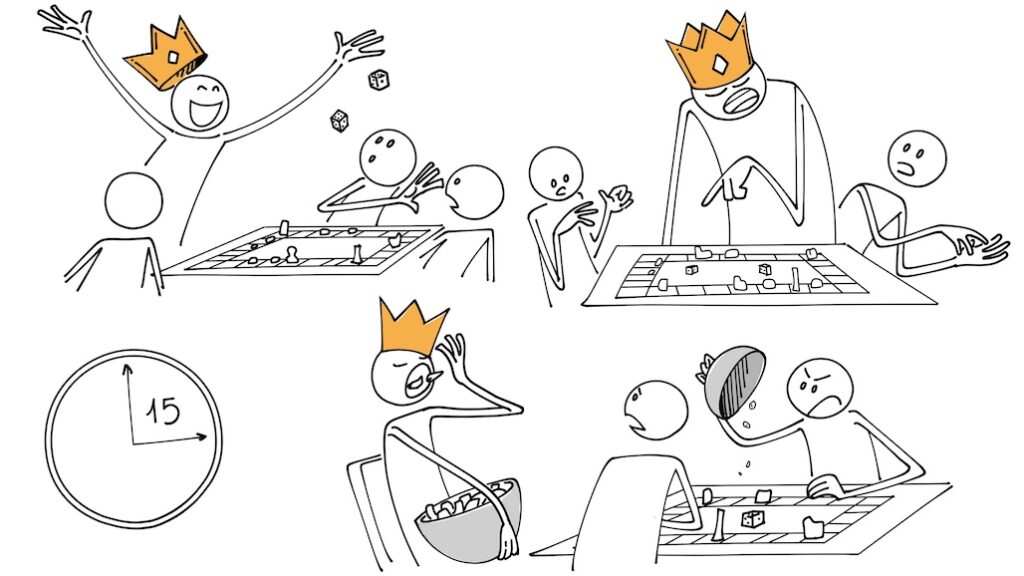
In the monopoly study, a coin-toss before the start, crowned one player “richer” than the others. The lucky one got more start-up cash, more dice rolls, and higher payouts for passing Go. It took only fifteen minutes before the lucky one was louder, more dominant, and hoarded the snacks meant for everyone. And when they eventually won, they often credited their “strategy,” instead of good fortune.
So if cardboard cash can breed entitlement so quickly, imagine the effects of real money and real houses.
how power corrupts
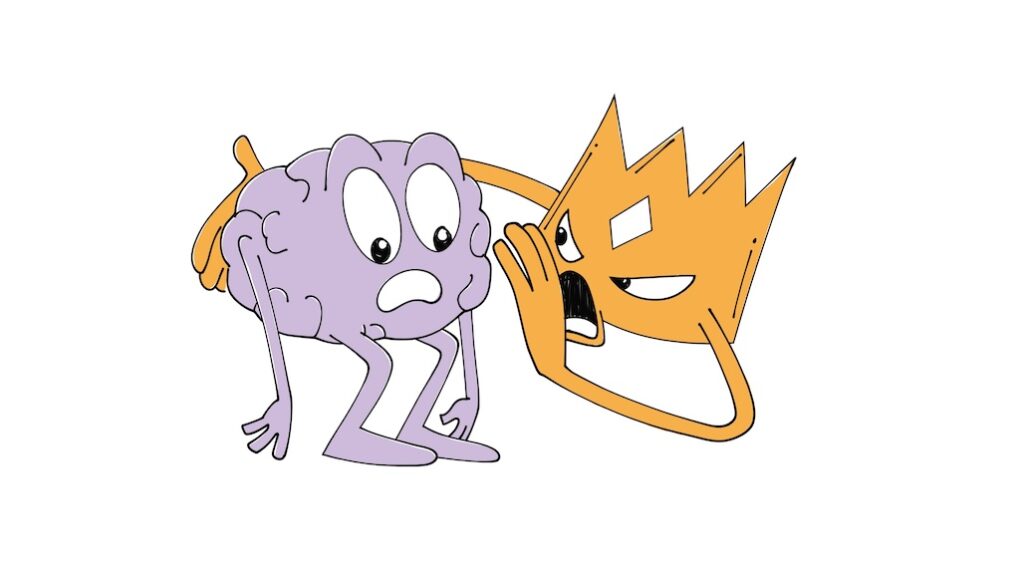
Power seems to corrupt our mind slowly; often through the gifts of title, wealth, or weapons. As we gain status, these privileges open doors, make orders easier to issue and harder to refuse.
Power and Distrust
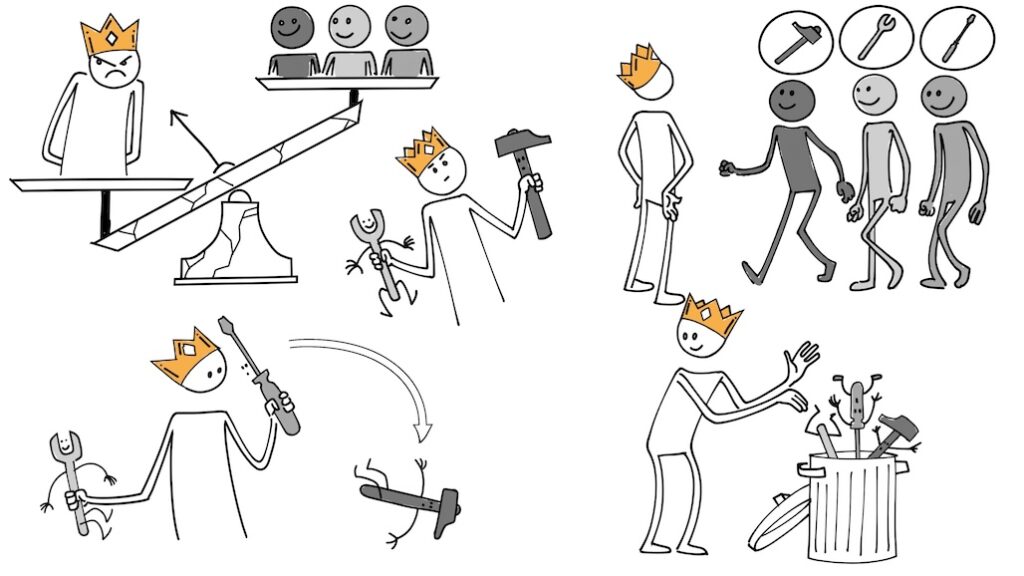
Others, driven by their own ambitions, often become more friendly, copy our behavior, or pledge us loyalty. At first, this seems advantageous, but we soon realize that it comes with a price, as they may ask for access, influence, or protection. This creates doubts and distrust.
This distrust can erode our sense of equality, and former friends may begin to look like instruments that can be used, replaced, or quietly dismissed. Finally, we start to fear foes and followers; we raise our fences, close our calendars, and travel only with an entourage.
Moral Superiority
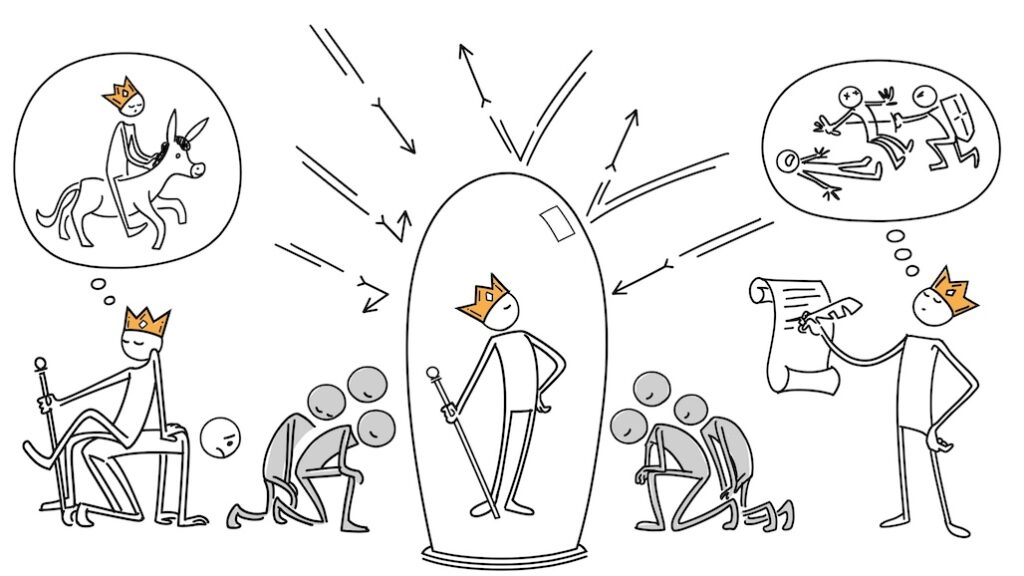
Cut off from ordinary life, our minds can start to drift toward grand doctrines: nationalism, socialism, or capitalism may seem to offer a simple solution for the other 99%. Eventually, we can become convinced of our own moral superiority and claim that we work for humanity itself, often bending rules “for the greater good”. Here lies the final danger: Surrounded by loyal disciples and insulated from consequences, those of high status can lose the capacity to recognize equals—and thereby grant themselves license to cause horrendous harm.
Power and the Brain
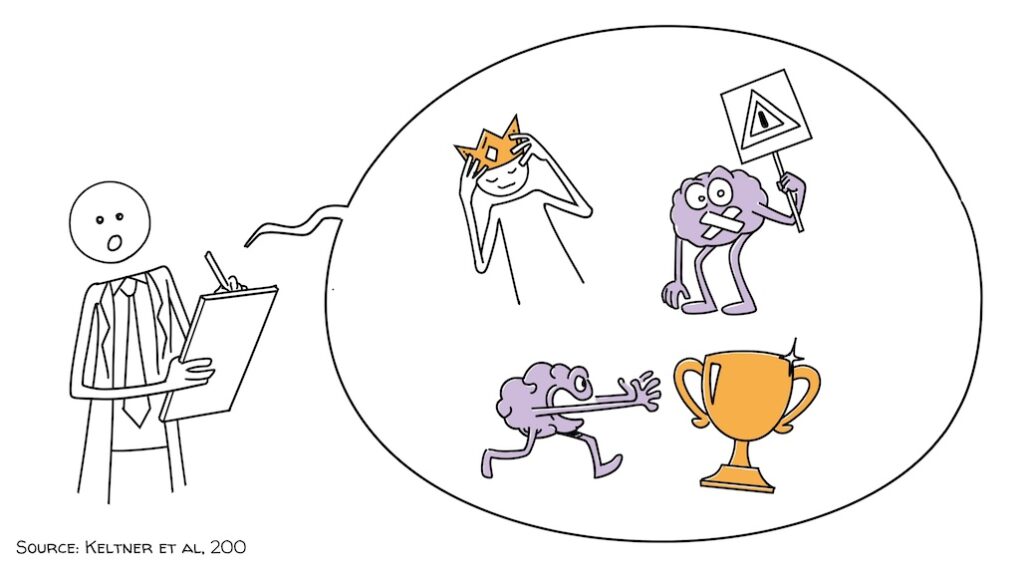
Neuroscientists claim that when we get power, it quiets the brain’s system for avoiding harm and activates circuits that chase quick reward. The result: our actions grow bolder, faster, and more self-centered. Cooperation thins out. So what can we do about this?
Preventing Abuse
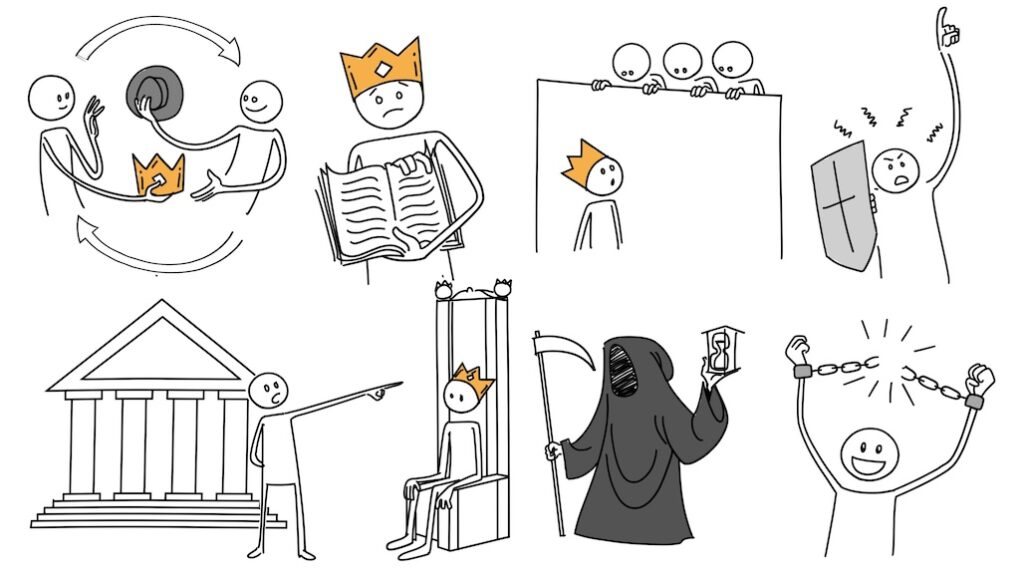
Our strongest defense lies in structure: rotating roles, open books, shared oversight, and protected, routine dissent—institutions that remind every ruler they are mortal and every citizen they are free.
That, Lord Acton would say, is how liberty survives.
Sources
- John Dalberg-Acton, 1st Baron Acton – Wikipedia.org
- Giurge, L. M., van Dijke, M., Zheng, M. X., & De Cremer, D. (2021). Does power corrupt the mind? The influence of power on moral reasoning and self-interested behavior. The Leadership Quarterly, 32(4), Article 101288.
- Piff, P. K. (2013, October). Does money make you mean? [Video]. TED Conferences.
- Keltner, D., Gruenfeld, D. H., & Anderson, C. (2003). Power, approach, and inhibition. Psychological Review, 110(2), 265–284.
- Keltner, D. (2016). The power paradox: How we gain and lose influence. Penguin Press.
Dig deeper!
- Watch Sprouts’ video on The Milgram Experiment: Obedience to Authority to understand why ordinary people may obey harmful orders from authority figures.
- Read The Power Paradox by Dr. Dacher Keltner from UC Berkeley’s Greater Good Science Center on the frameworks that explains how to gain influence without losing your humanity.
- Watch Dr. Paul Piff’s TED Talk on Does money make you mean? To explore how quickly artificial advantages turn into deep feelings of individual entitlement.
Classroom activity
Objective:
Students will investigate whether power and privilege can influence behavior, analyze the limits of the “power corrupts” theory, and design safeguards that reduce the risk of power abuse.
Materials Needed:
- Sprouts video: Why Power Corrupts
- Monopoly board games or simplified Monopoly sets
- Role cards with unequal starting advantages
- Play money, dice, and tokens
- Sticky notes and markers
- “Power Experiment” worksheet
Duration: 60 minutes
1. Introduction (5 minutes)
- Ask: “If you were given more money, more privileges, and fewer rules than everyone else, would you behave nicer?”
- Take a quick class vote.
- Tell students they will conduct a short experiment to investigate this question.
2. Rigged Monopoly Experiment & Observation (15 minutes)
- Select 4 students to play a shortened version of Monopoly while the rest of the class act as observers/researchers.
- Give each player different starting conditions to create an unequal power structure:
- Player 1 – Powerful/Privileged: more money, property, and a few special advantages
- Player 2 – Average: normal starting resources
- Players 3 & 4 – Disadvantaged: fewer resources and opportunities
- Tell the players only that they will play Monopoly with some unusual starting rules—do not reveal that the experiment is about power or corruption.
- While the game is played, observers watch how players interact, make decisions, respond to unequal conditions, and use their advantages.
- Students individually record their observations on the worksheet. Did the advantaged player become more confident, demanding, competitive, generous, dismissive, or willing to bend rules? Did disadvantaged players behave differently?
3. Reveal & Analyze the Experiment (10 minutes)
- Reveal the purpose of the experiment.
- Ask:
- “Did the unequal power or resources appear to influence anyone’s behavior?”
- “What behaviors did you observe?”
- “Could something other than power explain these behaviors?”
- Emphasize that the experiment is a classroom simulation, not proof that power automatically makes people corrupt.
4. Watch & Connect to the Video (10 minutes)
- Watch the Sprouts video Why Power Corrupts.
- Ask students to identify ideas from the video that connect to their Monopoly observations.
- Discuss the key concept: Power can influence behavior, but having power does not necessarily make someone corrupt.
5. Class Safeguard Challenge (10 minutes)
- Ask: “If power can sometimes encourage harmful behavior, how can we prevent the abuse of power?”
- Every student suggests at least one method.
- The teacher records ideas and key vocabulary on the Power worksheet table or whiteboard, such as transparency, accountability, oversight, term limits, shared decision-making, equal rules, consequences, and protected dissent.
- Briefly discuss how each safeguard could reduce the risk of power abuse.
6. Class Synthesis & Reflection (10 minutes)
- Review the proposed safeguards as a class.
- Ask: “Which three would be most effective, and why?”
- Students vote for their top three choices and briefly explain their reasoning.
- Finish with an individual exit statement: “Power does not necessarily corrupt because __________. However, power is safer when __________.”
Collaborators
- Script: Jonas Koblin
- Cartoon artist: Pascal Gaggelli
- Producer: Selina Bador
- Voice artist: Matt
- Coloring: Nalin
- Editing: Peera Lertsukittipongsa
- Sound Design: Miguel Ojeda
- Publishing: Vijyada Songrienchai