

The RACI matrix is a project management tool to clarify team roles and responsibilities. By defining who is Responsible, Accountable, Consulted, and Informed—with exactly one accountable leader per task—it eliminates ambiguity and prevents redundancies.
the full story
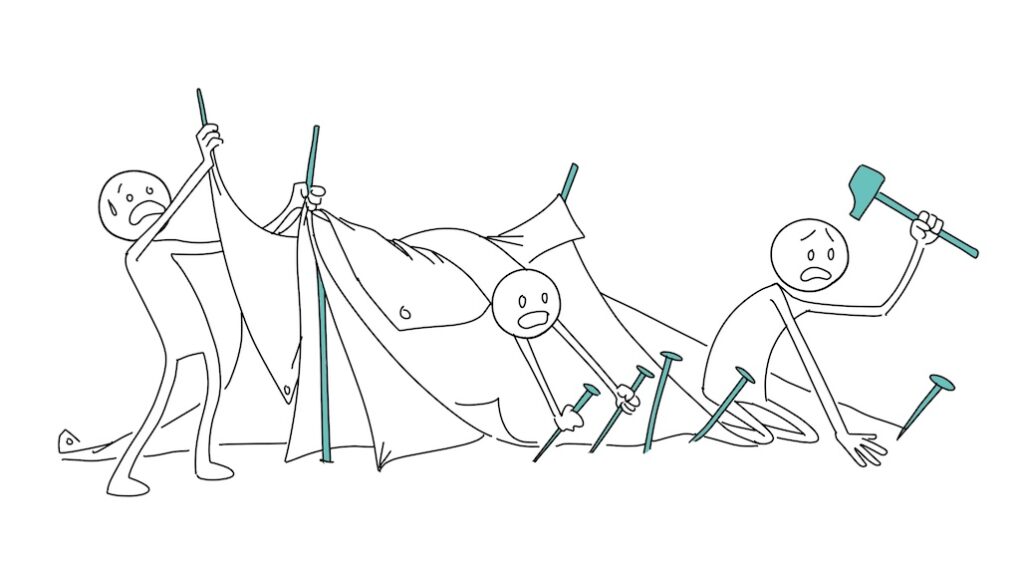
People can be lazy, uncaring, or incompetent, but if they collaborate, they often fail. Simply because no one knows who should do what. Some of the most effective teams use a simple method to make roles and responsibilities crystal clear. It’s called the RACI matrix.
What is raci?
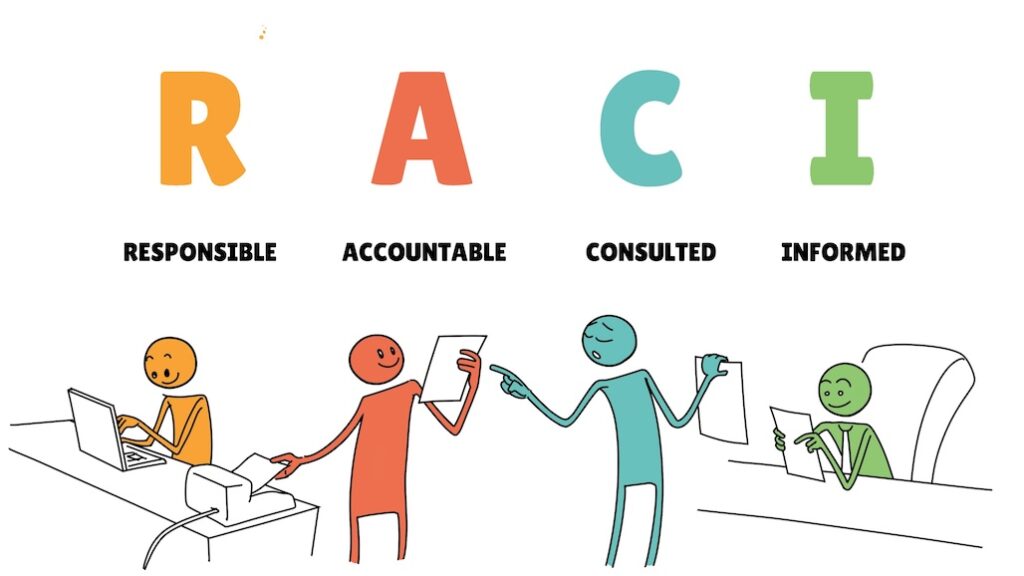
RACI stands for
Responsible: the people who do the work.
Accountable: the one person who owns the result.
Consulted: the ones who advise before decisions are made.
Informed: those who need to know after decisions are made.
So how does that look in practice?
RACI EXample
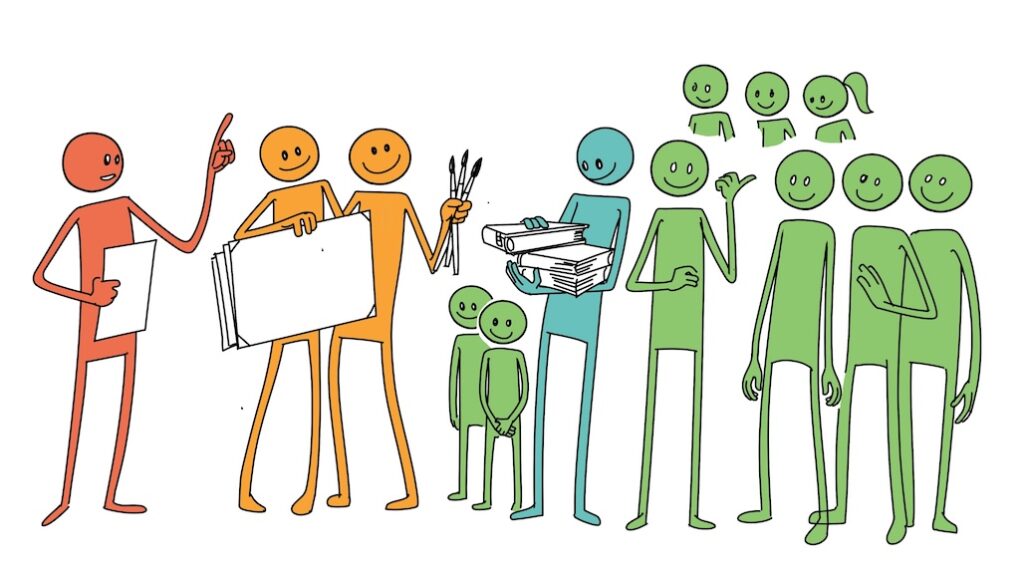
Imagine planning a school fair. There’s a project leader, two designers, a teacher, a parent representative—and plenty of volunteers. To keep everyone on the same page, they draw up a simple table.
role assignment
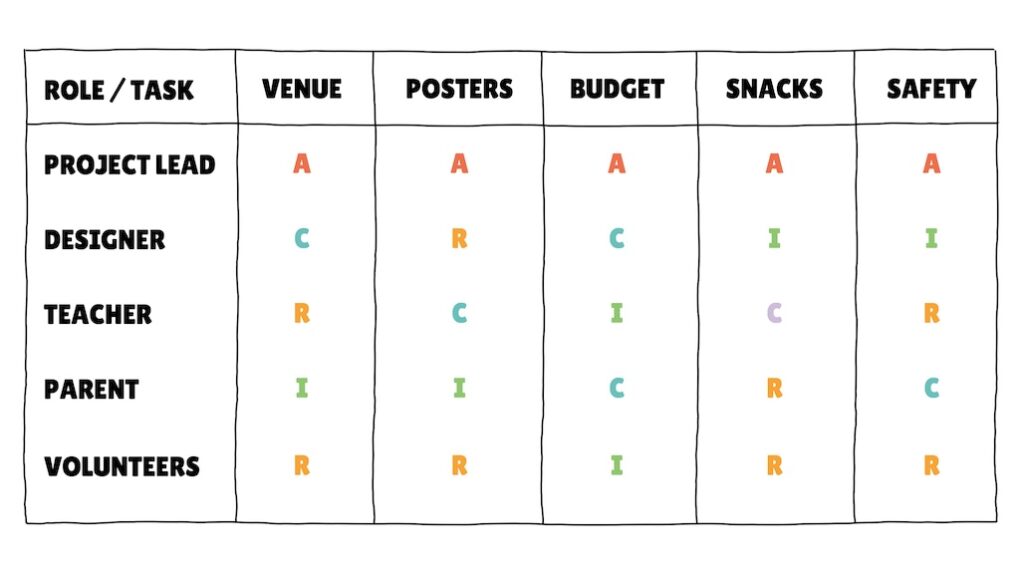
Across the top, they list all the tasks. Down the side, they write each role. Now comes the magic part. For every task, they assign one Accountable, and those who should be Responsible, Consulted, and Informed.
Finally, they review it together and ensure everyone agrees. Now there’s one important rule. Per each task, there can be many Responsibilities, but only one Accountable. Because if everyone is accountable—no one really is.
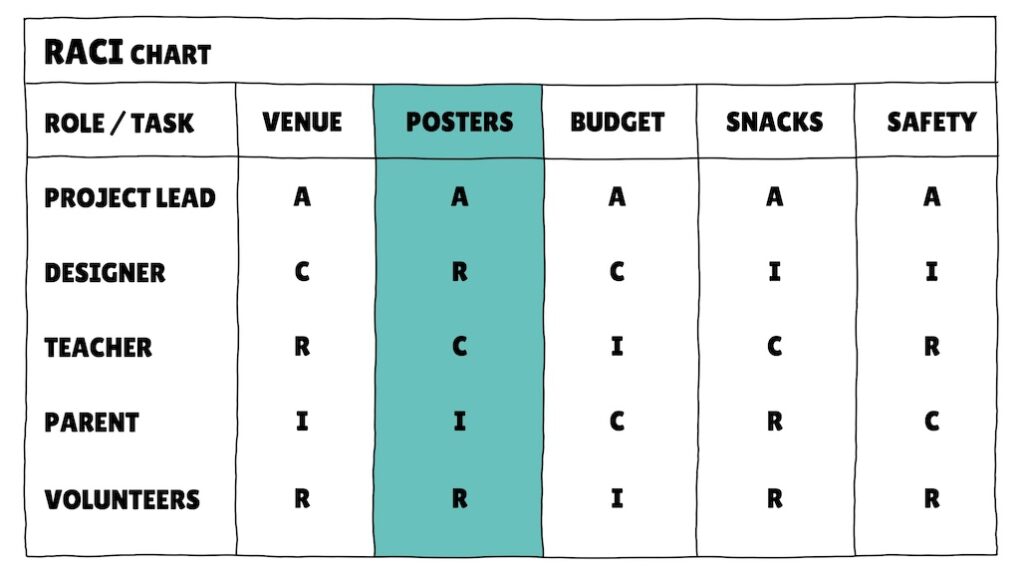
So, how do these roles actually play out? Let’s look at one job: making the poster.
The designers are responsible; they work on different ideas. The teacher reviews the work and consults. The project lead is accountable and decides which draft to pick. After that, parents and volunteers are informed.
RACI MAtrix benefits
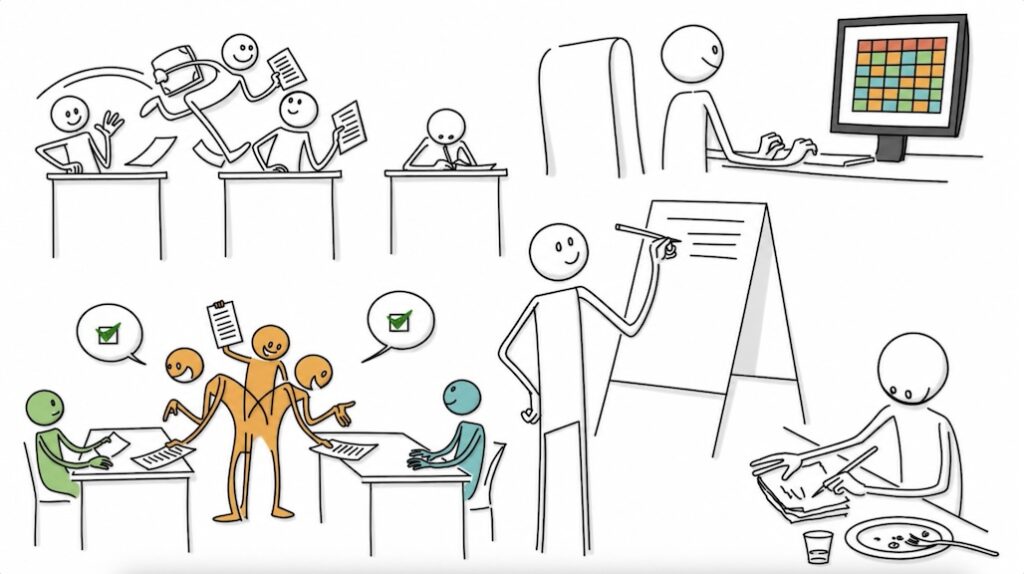
The RACI matrix works best when projects cross departments or when multiple approvals are needed. You can make one in a spreadsheet, on a whiteboard, or even on a napkin. In the end, it’s not about the tool, the goal is clarity. Clarity saves time. It prevents blame. It lets people focus on their part of the mission—and maybe even reveal that most people can be motivated, caring, and competent after all.
Sources
- Responsibility assignment matrix – Wikipedia.org
- Sison, M., & Sison, M. (2026, June 1). RACI Matrix: Your Ultimate guide in 2026 (+ free templates). project-management.com.
Dig deeper!
- Read CIO Magazine’s guide to RACI design to learn how a well-structured RACI chart can improve team communication, accountability, and project coordination.
- Watch “RACI Explained” on the RACI YouTube channel for a simple introduction to the framework, including common mistakes to avoid when creating a RACI chart.
- Explore Atlassian’s comparison of RACI, RAPID, and DACI to understand the differences between these decision-making frameworks and when each approach works best.
Classroom activity
Objective:
Students will understand the concept of the RACI Matrix and learn how clear roles and responsibilities improve teamwork, communication, and project success.
Duration:
60 minutes
Materials Needed:
- Sprouts video: The RACI Matrix Explained
- Whiteboard or chart paper
- Markers
- Sticky notes or index cards
- Blank RACI matrix template for each group
Steps
1. Introduction and Video Viewing (10 minutes)
The teacher asks: “Have you ever worked on a group project where you debated over small decisions too long, so you did not get the big things done?” Students briefly share experiences. Then introduce the video and ask students to identify why teams fail and how the RACI Matrix solves this problem. Watch the Sprouts video.
2. Group Analysis (10 minutes)
In small groups, students identify the four RACI roles: Responsible, Accountable, Consulted, and Informed. They discuss why each role is necessary and summarize it in their own words.
3. Build a RACI Matrix (10 minutes)
Groups receive a scenario such as organizing a school fair, charity event, or class presentation. They list tasks and assign RACI roles using a blank matrix.
4. Group Presentations and Synthesis (10 minutes)
Groups present their matrices. The class compares solutions and identifies common patterns. The teacher reinforces the rule that each task should have only one Accountable person.
5. Role-Play Challenge (10 minutes)
Groups act out one task from their project. The class identifies who is Responsible, Accountable, Consulted, and Informed based on the role-play.
6. Discussion (5 minutes)
Discuss: “Would a RACI Matrix improve teamwork in school, sports, or community projects? Why or why not?”
7. Reflection and Sharing (5 minutes)
Students write a brief response: “How can role clarity prevent confusion and conflict in teams?” Volunteers share their reflections. Conclude by emphasizing that the purpose of RACI is not control, but clarity and accountability.
Collaborators
- Script: Jonas Koblin
- Cartoon artist: Pascal Gaggelli
- Producer: Selina Bador
- Voice artist: Matt
- Coloring: Nalin
- Editing: Peera Lertsukittipongsa
- Sound Design: Miguel Ojeda
- Publishing: Vijyada Songrienchai